INSTEAD OF A DOOMSCROLL
Put the phone down. Finish a clearer sentence.
The mission, said plainly: trade a spiral of other people’s panic for one sentence about your own brain that you can actually use.
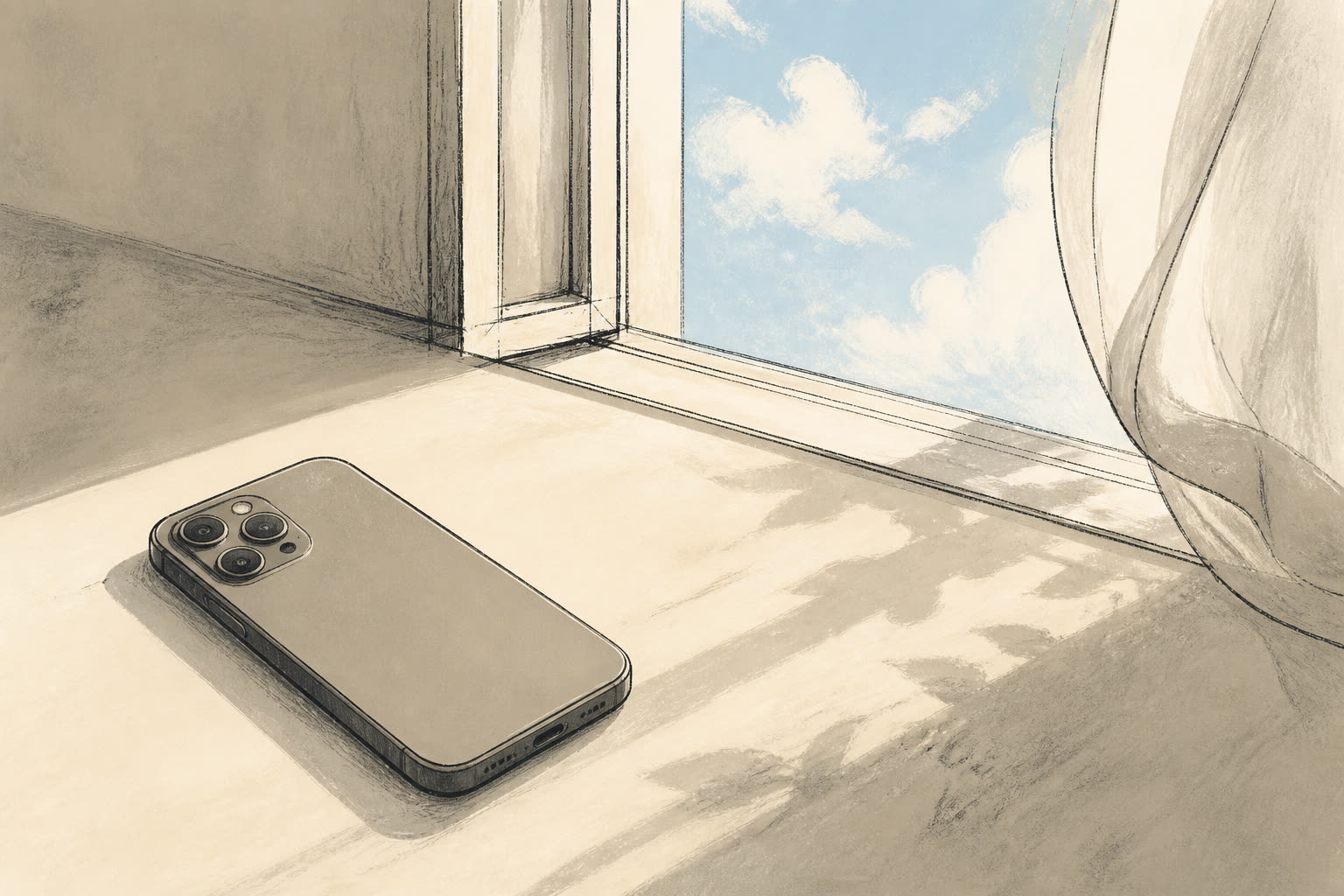
A feed will always have a next thing. Your nervous system will always have a next worry. Stack them and an hour disappears into other people’s emergencies, quizzes about your personality, and a joke you will not remember tomorrow.
We would rather you leave with a clearer sentence about your own brain. That is the whole project, said without a brochure: accessible, a little fun, easy enough to finish. Psychology you can actually use — then go outside, or at least look up.
It is not a fair fight, and that is the point
NIMH notes that the prefrontal cortex — ranking, braking, choosing — is among the last regions to finish, stretching into the mid-to-late twenties. A designed infinite scroll is aimed at a planning system still under construction. Getting pulled in is not a character flaw. It is a product working as designed.
The teen brain is also tuned to peers. A like, a read receipt, a headline about someone like you: social alarms feel like information. Sometimes they are. Often they are bait.
A smaller door than “never use your phone”
Put it face-down for the length of one explainer. Write one sentence you could send a friend. Then you can go back. The point is not a brand of abstinence. The point is interrupting a spiral with something true and short.
If what you are scrolling is self-harm content, or you feel unsafe, close the app and use 988 or talk to a person in the room. A clearer sentence includes “I need help now.”
Source: National Institute of Mental Health, “The Teen Brain: 7 Things to Know”. We rewrite in student language. If a clinician disagrees with a simplification, believe the clinician.
Keep reading
THE PLANNING BRAIN
Why “just do it” fails
Your prefrontal cortex is still under construction. Starting is a skill, not a personality test.
Read
REFLECT
Let rest have a purpose
Teen sleep chemistry runs late. Rest is not a reward you earn after collapsing. It is part of how the brain works.
Read
THE ALARM SYSTEM
Stress is a body thing
A quiz can recruit the same physiology as a threat. Learn the alarm without turning breathing into a medical device.
Read