RUMINATION
Why your brain replays the same conversation
A loop after a hallway comment can be practice — or it can steal the night. Rumination is a thinking habit, not a personality.
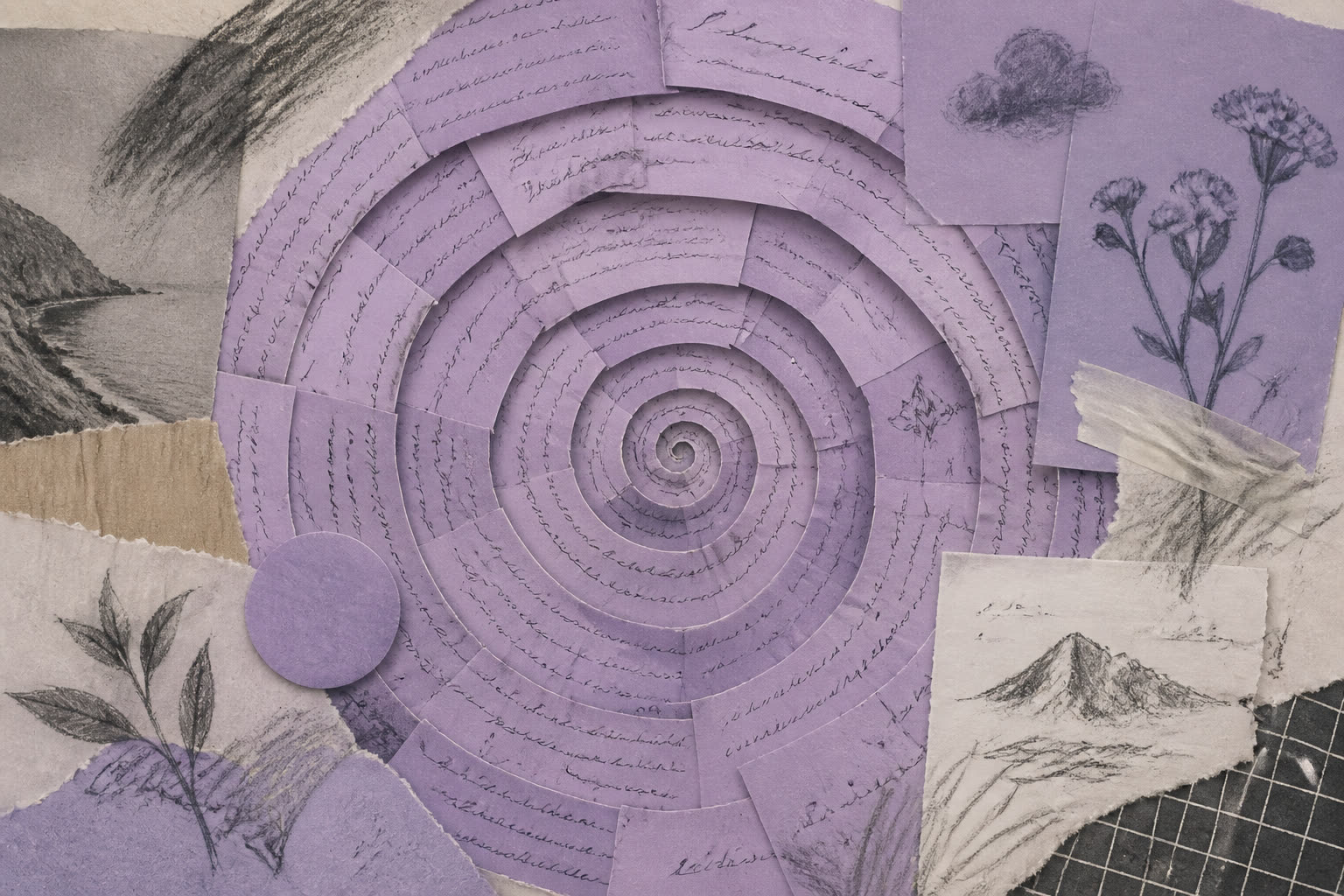
You have a better line now. Your brain hits replay anyway — in the shower, on the walk home, at 1:07 a.m. The other person has moved on. You are still directing the scene.
Replay is one way nervous systems practice. A still-developing social brain treats a possible embarrassment like a problem worth solving. NIMH notes that peer life is especially loud in the teen years, while the planning regions that could say “enough” are still under construction. Sometimes the loop is useful: you learn, you repair. Sometimes it stops being a lesson and becomes the whole night.
When practice turns into chewing
Rumination is a plain word for chewing the same thought past the point of new information. It is not a personality. Clinicians use related ideas in several conditions. This page is a map of a feeling, not a label you should paste on yourself from a carousel.
A loop often shows up with body heat: tight chest, restlessness, a need to check the chat again. That is the alarm system staying slightly on, not proof that the conversation is still happening.
A smaller door
Write the loop once so it has a place to sit. Move your body. Talk to one person who will not put it in a group chat. You do not have to solve the hallway in the dark.
If the replay includes wanting to disappear, not being safe, or not wanting to be alive, skip the literacy frame. Call or text 988, text HOME to 741741, or tell a trusted adult.
Source: National Institute of Mental Health, “The Teen Brain: 7 Things to Know”. We rewrite in student language. If a clinician disagrees with a simplification, believe the clinician.
Keep reading
THE PLANNING BRAIN
Why “just do it” fails
Your prefrontal cortex is still under construction. Starting is a skill, not a personality test.
Read

REFLECT
Let rest have a purpose
Teen sleep chemistry runs late. Rest is not a reward you earn after collapsing. It is part of how the brain works.
Read
THE ALARM SYSTEM
Stress is a body thing
A quiz can recruit the same physiology as a threat. Learn the alarm without turning breathing into a medical device.
Read